Small brands: quick vendor questions to choose screen printing or embroidery. Screen printing pays off around 100 units.
For small logos and durable uniform pieces, embroidery is usually the better fit; for large, full-color graphics and bulk tee orders, screen printing usually wins. The right choice depends on design complexity, garment type, order size, and budget. This article walks through both methods so you can match your project to the process that will hold up and look right.
TL;DR:
OTHER°MEANING
Wear Your Faith With Meaning
Explore thoughtfully designed faith-themed clothing with powerful scripture and messages, made for expressing your beliefs in a modern style.
Explore faith-inspired clothing
What is embroidery and when should you choose it
Embroidery starts with digitizing artwork, converting a logo or design into a stitch file that a machine reads and sews directly into fabric. A stabilizer sits behind or beneath the garment during stitching, and that backing choice affects the final result more than most buyers expect. Cut-away, tear-away, wash-away, and heat-away backings each suit different fabrics, and picking the wrong one is the leading cause of puckering and uneven stitching.
The finished look is raised and textured, which reads as premium on polos, caps, and left-chest logos. That same texture makes embroidery a poor match for gradients or photographic detail: stitches can’t blend colors the way ink does, and text below a certain height turns into a blob of thread rather than legible letters.
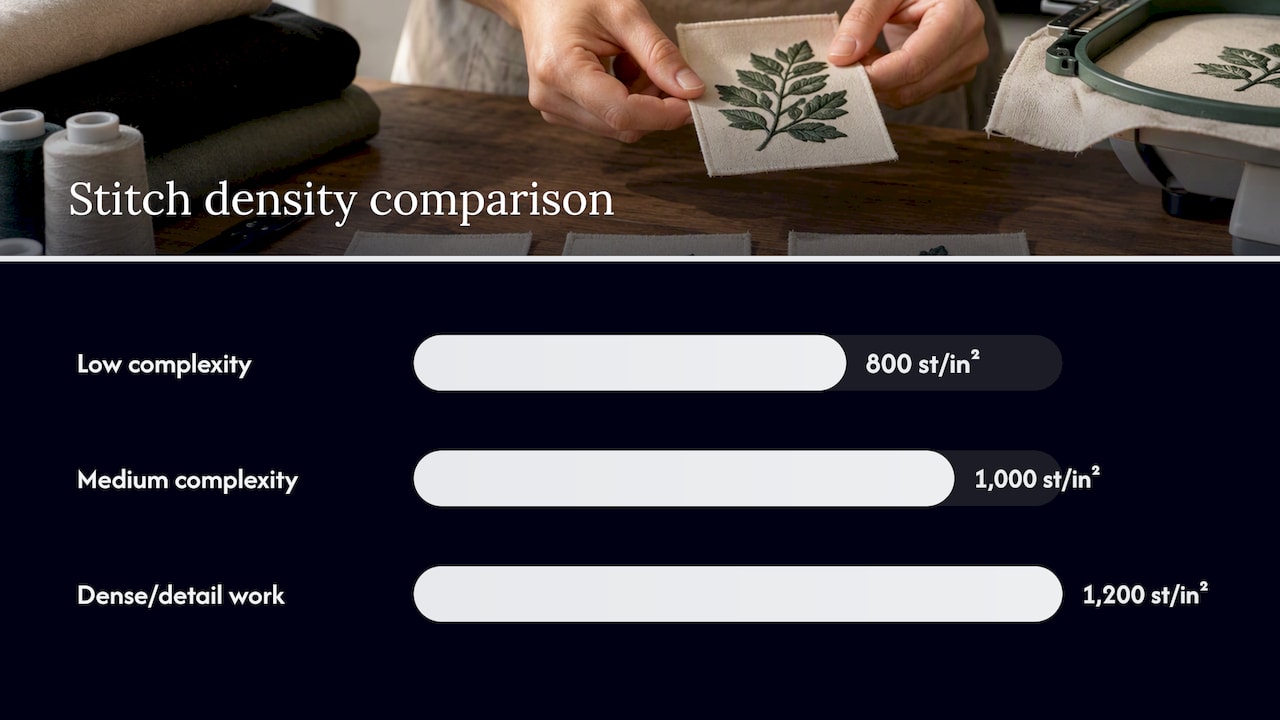
Production cost follows a predictable formula. Area multiplied by stitch density gives total stitches, and stitch count drives both machine time and price. A typical 3 inch by 1.5 inch logo covers 4.5 square inches; at a medium density of 1,000 stitches per square inch, that’s 4,500 stitches, and machine time runs about 3.15 minutes at standard speeds.
Embroidery cost scales with stitch count, not garment size: a small, simple logo at 800 stitches per square inch finishes faster and cheaper than a dense design at 1,200, even on the same shirt.
Pro Tip: Ask your vendor for the exact stitch count before approving a design; a jump from 1,000 to 1,200 stitches per square inch can add real cost across a bulk order.
Wash resistance is generally strong when the right stabilizer, underlay, and thread are used, which is why embroidery remains the standard for uniforms and pieces meant to survive years of laundering.
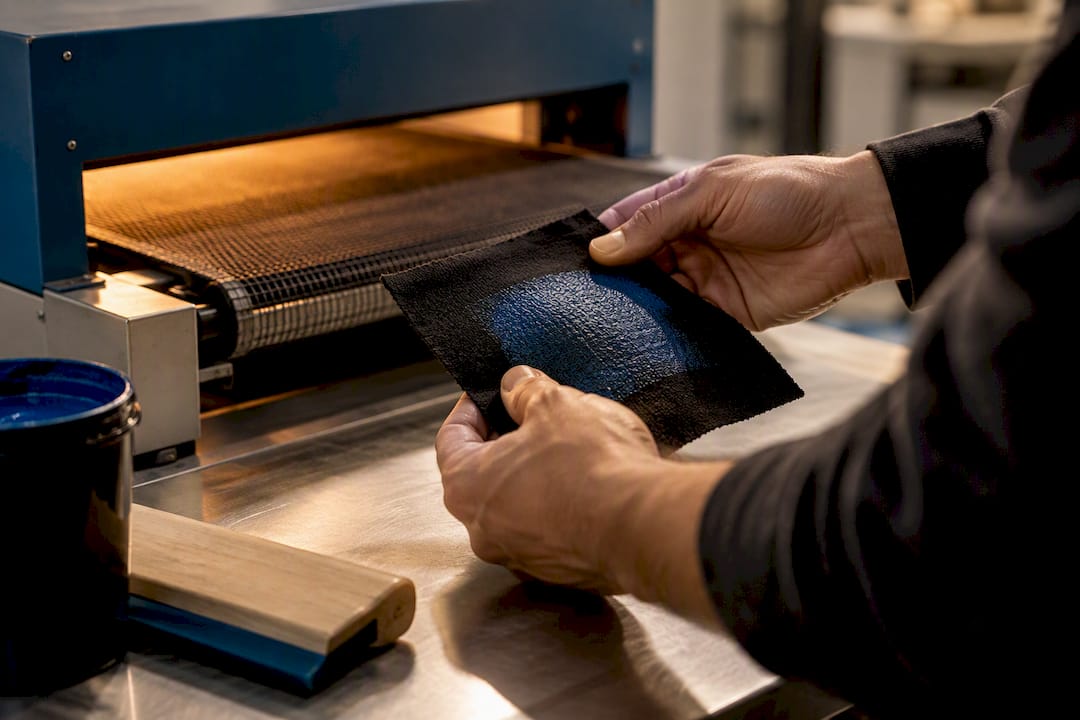
Screen printing works by pushing ink through a fine mesh screen, with one screen cut for each color in the design. On dark garments, a white underbase usually goes down first so the colors on top stay vibrant instead of muddying into the fabric. This mesh-based ink deposition is a long-established printmaking technique well suited to saturated, flat color areas and layered, multi-color artwork.
The finish is flat and bold rather than textured, and with proper color separations, screen printing can reproduce halftones and near-photographic detail that embroidery simply cannot stitch. That flexibility comes with a setup cost: each color needs its own screen, plus pre-press time to burn the screens and set registration. That fixed cost is spread across the whole order, so per-unit price drops fast as quantity climbs.
Screen printing and sublimation showed higher durability against washing and abrasion than digital printing in controlled testing of textile printing methods, a meaningful data point if you’re deciding between screen printing and DTG printing for a design that will see heavy wear.
Longevity depends heavily on curing. Underdried ink cracks and peels quickly, while proper cure temperature and ink selection make prints last through repeated washing. Vendors who skip clear wash-care instructions are usually cutting corners on this step.
Placed side by side, the two methods split cleanly along a handful of practical lines that should drive your decision.
One industry comparison sums up the trade-off simply: embroidery suits uniforms and small logos where durability and a premium look matter most, while screen printing suits bold, large-scale graphics on bigger runs.
Failure modes differ too. Screen prints are vulnerable to heat: overdrying or high dryer temperatures can reactivate ink plasticizers, causing tackiness and eventual peeling, so cool washing and air drying extend life. Embroidery’s main risk is loose stitches or puckering from a mismatched or missing stabilizer, which proper backing selection largely prevents.
Before you commit to either method, work through a short checklist rather than guessing based on what looks nicer in a sample photo.
When you talk to a vendor, ask for a digitized stitch estimate before approving embroidery pricing, request a screen proof before bulk screen printing runs, and ask directly about wash test results, setup fees, order minimums, and lead times.
Pro Tip: Order one sample garment before committing to a full run, whichever method you choose. It’s the cheapest insurance against a design that looks fine on screen but doesn’t translate to fabric.
Walk away from any vendor who won’t provide a sample, gives vague or shifting pricing, skips care instructions, or recommends a method inconsistent with your design and fabric. As a simple rule of thumb: sample first on anything new, lean on embroidery for logos, polos, and caps, and lean on screen printing for full-front art and runs large enough to clear the roughly 100-unit break-even point.
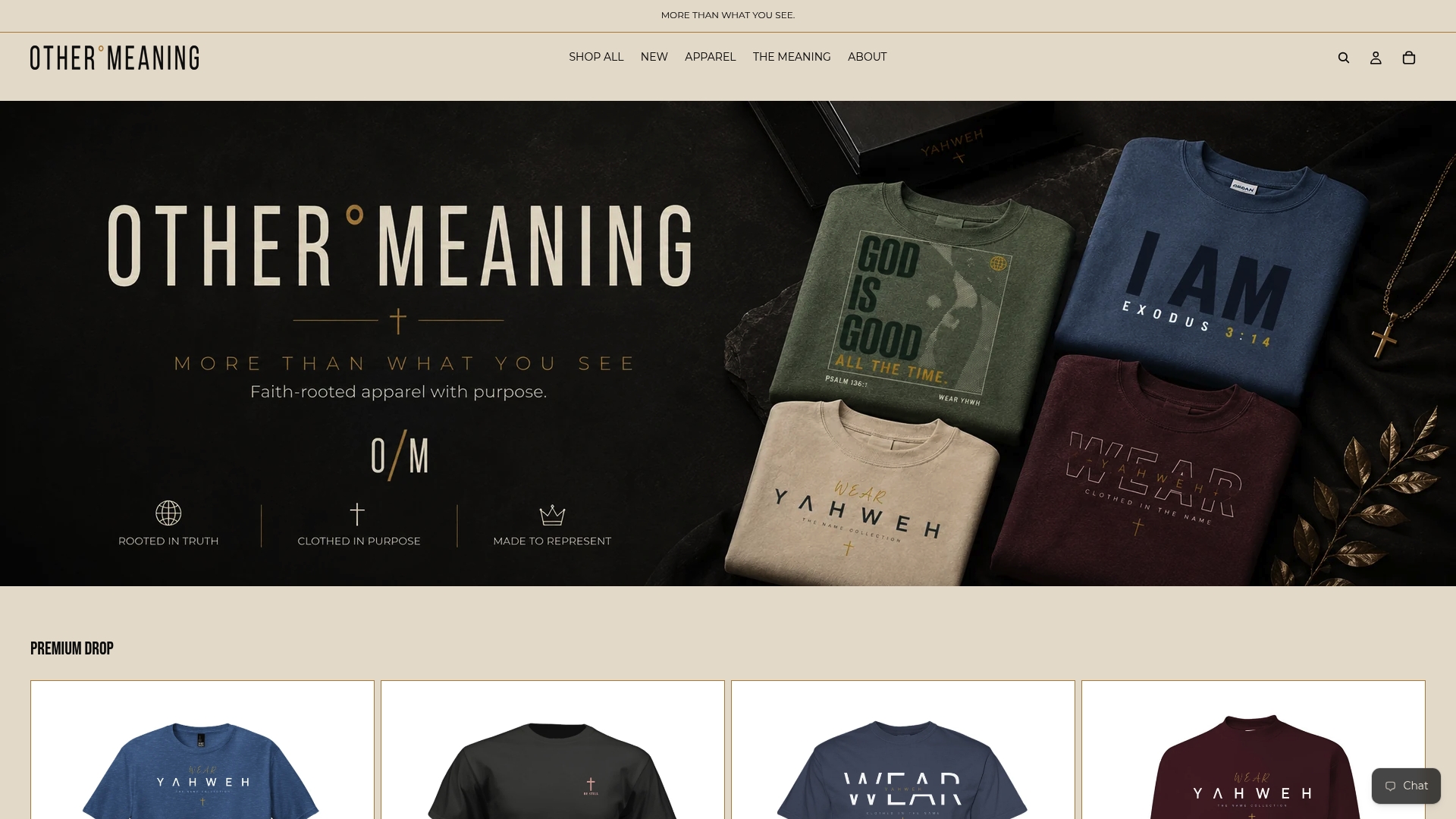
Othermeaning’s catalog splits naturally along these same lines. The WEAR YAHWEH — Clothed in the Name Premium Tee and the I AM Tee both suit large front-graphic screen printing when the design carries detailed scripture typography or layered artwork, while a smaller emblem on the same tee works well embroidered at the chest.
Heavyweight pieces like the WEAR YAHWEH — Clothed in the Name Heavyweight Sweatshirt, the WEAR YAHWEH — The Name Collection Heavyweight Sweatshirt, and the GOD IS GOOD — All the Time Heavyweight Sweatshirt take embroidery well on the chest or left-chest, where a fleece-weight fabric holds stitching cleanly with the right cut-away backing. Lighter blends like the WEAR YAHWEH — The Name Collection CVC Tee handle large-format screen art across the front without the stabilizer concerns heavier embroidery placement can raise.
The pieces are built around premium materials and streetwear-inspired fits designed to hold up to real wear, not just look good in a photo. Requesting a mockup before ordering in bulk remains the simplest way to confirm a design translates well to the chosen method.
Quality decoration starts with matching the technique to the fabric, not the other way around.
Most buyers overrate visual complexity and underrate durability testing. A design that looks stunning as a digital mockup can fail fast if it’s screen printed without correct curing or embroidered without the right stabilizer, and the wash and abrasion data backs that up more than any style preference does.
The conventional advice to “pick embroidery for a premium look” skips the part that actually determines premium: whether the vendor used the correct backing and stitch density, or the correct cure temperature for ink. Method matters less than execution. A well-executed screen print will outlast a poorly stabilized embroidery job, and vice versa.
If you take one thing from this comparison, make it this: ask about process details, stitch counts, stabilizer type, cure temperature, before you ask about price. Price differences between vendors are often explained by which corners got cut to hit that number.
— Javier
Once you know whether your project calls for embroidery’s texture or screen printing’s color range, the next step is choosing a garment built to carry it well. Othermeaning’s tees and sweatshirts use premium materials designed to hold detail whether the decoration is stitched or printed, so a scripture wordmark or a full-front graphic both land the way they’re meant to.
Browse the Tees or Sweatshirts collections to find the piece that matches your decoration plan.
Neither wins outright; the better choice depends on your design and garment. Industry comparisons find embroidery best for small logos and durable uniforms, while screen printing suits large, bold graphics on bigger runs.
Screen printing requires a separate screen and setup cost for each color, which makes small orders less economical. It’s also heat-sensitive: overdrying or high dryer temperatures can cause the print to soften and eventually peel.
Embroidery struggles with fine gradients, photographic detail, and very small text, since thread can’t blend colors the way ink does. Poor stabilizer choice is also the main cause of puckering and uneven stitching.
It depends on order size and design. Cost analysis shows screen printing becomes the most economical method for batches over roughly 100 units, while embroidery or other methods can be cheaper for smaller runs depending on the design’s stitch count.